Overview
Temperature absolutely impacts battery performance. The good news? Lithium golf cart batteries handle temperature swings far better than traditional lead-acid packs. Below, you’ll learn what actually changes in cold and hot weather, how your BMS (Battery Management System) protects the pack, and what you can do to maintain range and lifespan all year.
How Cold Weather Affects Lithium Batteries
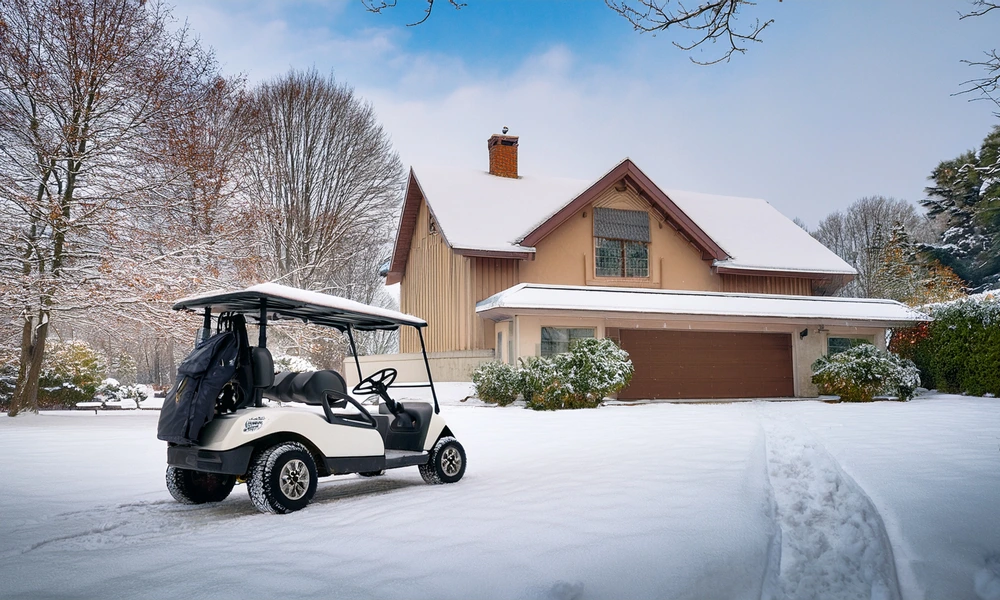
When temperatures dip, the chemistry inside lithium cells slows down. That can temporarily reduce available capacity and peak power. You may notice:
- Slightly reduced range until the pack warms up during use.
- Slower charging — most BMS units block charging below ~32°F (0°C) to protect the cells.
- Temporary effect — performance returns once the battery warms above freezing.
Pro tips for cold days:
- Park indoors or in a garage when possible; start your ride gently to let the pack warm up.
- Only charge once the pack is above ~40°F (4°C).
- Consider a self-heating lithium pack if you routinely operate in freezing climates.
Maintenance basics to protect range •
Shop lithium-compatible chargers
How Hot Weather Affects Lithium Batteries
Heat has the opposite effect on resistance and can initially feel “peppy,” but sustained high temperatures accelerate cell aging. Watch for:
- BMS throttling output if internal temps climb too high.
- Reduced charging efficiency in heat — avoid charging in direct sun.
- Faster long-term degradation if packs routinely sit above ~120°F (49°C).
Pro tips for hot days:
- Park in shade and ventilate the battery compartment; avoid enclosed heat traps.
- Charge during cooler parts of the day (early morning or evening).
- Don’t leave the pack at 100% for days in extreme heat; store around 40–60% if idle.
Ways to maximize range in any season •
Lithium Knowledge hub
Why Lithium Still Outperforms Lead-Acid in Any Weather
- Stable voltage: Lithium maintains higher, flatter voltage across the discharge curve, so carts feel stronger longer.
- No sulfation or freezing damage: Lead-acid hates cold and inactivity; lithium tolerates it far better when charged correctly.
- Active protection: A quality BMS monitors temperature, voltage, and current to prevent abuse and extend service life.
Curious about common misconceptions? Read:
Lithium Battery Myths Debunked for Golf Cart Owners.
Year-Round Best Practices
- Charge smart: Keep charging between ~40–90°F (4–32°C) when possible; avoid charging below freezing.
- Store smart: For long storage, park cool and dry, disconnect accessories, and leave the pack ~40–60% state of charge.
- Keep it clean: Inspect/clean terminals and verify torque on connections to avoid resistive losses.
- Monitor the BMS: If your pack has an app, check temps, cell balance, and cycle count monthly.
Also helpful:
How to tell if your golf cart battery needs replacement
Frequently Asked Questions
Can I use my golf cart below freezing?
Yes — driving is fine, but don’t charge below 32°F (0°C) unless your pack is self-heating. Let the pack warm above freezing before charging.
Will summer heat permanently damage my pack?
Occasional heat exposure isn’t a problem, but prolonged high temps accelerate aging. Park in shade, ventilate, and avoid hot-soak charging.
Do I need a heated lithium battery?
If you regularly operate below freezing, a self-heating lithium pack improves convenience, charge acceptance, and cold-start performance.
Is lithium still better than lead-acid in winter?
Yes. Even with temporary cold-weather capacity loss, lithium avoids sulfation, recovers quickly with temperature, and needs far less maintenance.
Bottom line: Temperature changes are normal — and with a quality BMS and a few smart habits, lithium golf cart batteries deliver reliable performance year-round.